Static PDFs have been the default for residential quotes for twenty years. They're familiar. They're easy to attach. They print cleanly. They've also been the bottleneck of the construction sales process for at least the last five.
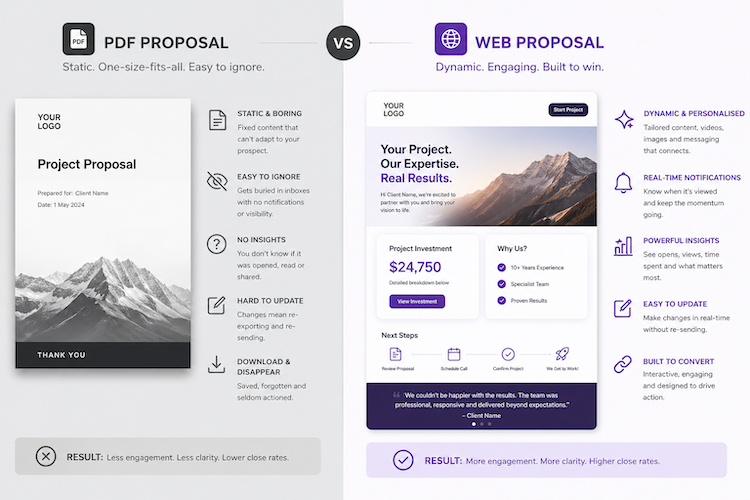
Here's what a static PDF actually does for you: it freezes the quote at a point in time; it's easy for the client to forward, save, or print; it doesn't require anything from the client — they can just open and read.
And here's what it can't do: tell you when the client opened it (or whether they have at all); update if scope changes — you have to email a new version and hope they open the right one; embed images, walkthroughs, or links to similar past work; let the client browse at their own pace, expanding sections that interest them and skimming over sections they don't care about; capture a signature or acceptance directly.
An interactive web-based proposal does all of those. The client opens a link instead of a PDF. They see your branding, the scope laid out properly, optionally images of similar past work, and structured pricing they can navigate. You get notified when they open it and what links they click, then can follow up with context.
The gap shows up most clearly on jobs over $50k. The clients who are spending real money want to feel like they're working with a builder who runs a real business. A static PDF doesn't deliver that signal anymore. An interactive web proposal does.
The catch — and this matters — is that web proposals are only better if the underlying work is better. A polished proposal hiding a sloppy quote is worse than a plain PDF with a careful quote. The format amplifies whatever you've built. If your scope is tight and your pricing is honest, a web proposal compounds that. If it isn't, a web proposal exposes it faster.